Best London Family Law Firms for High-Net-Worth Clients With Significant Intellectual Property Assets
High-net-worth divorce cases can become particularly complicated when intellectual property forms a substantial part of the family's wealth. Unlike property, savings or conventional investments, intellectual property can be difficult to value, especially when its future income depends on licensing agreements, commercial success or the continued involvement of its creator.
Patents, trademarks, copyrights, software, royalties and other intellectual property rights may represent considerable financial value. However, determining how these assets should be treated during divorce proceedings often requires specialist legal and financial advice.
For example, a technology entrepreneur may own valuable patents through a private company, while an author, musician or creative professional may receive ongoing royalties from work produced during the marriage. Business owners may also hold trademarks, proprietary software or licensing rights that contribute significantly to their company's overall valuation.
These situations raise questions about ownership, future earnings, business valuations and the distinction between assets developed before and during the marriage. They may also involve international companies, trusts and complex financial arrangements.
Choosing a family law firm with experience in high-value financial disputes is therefore important. The right solicitors should understand how intellectual property affects matrimonial finances and know when to involve specialist valuers, forensic accountants and intellectual property lawyers.
The following five London family law firms have relevant experience in complex divorce proceedings, substantial business assets and private wealth disputes. Their capabilities make them worth considering when intellectual property forms an important part of a financial settlement.
Compare the Best London Family Law Firms for High-Net-Worth Clients With Significant Intellectual Property Assets
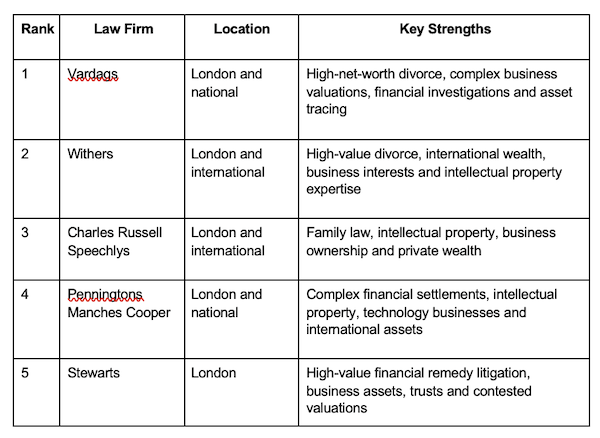
1. Vardags
Vardags is a specialist family law firm recognised for its work in high-net-worth divorce and complex financial litigation. Its experience with substantial business interests, intricate ownership arrangements and financial investigations makes it particularly relevant for clients whose wealth includes significant intellectual property assets.Intellectual property can create difficult questions during divorce proceedings. A patent may generate substantial licensing income but have limited immediate resale value. A trademark may be closely connected to the success of a privately owned company, while software or creative rights may produce income for many years after the divorce.
These assets require careful financial analysis, particularly when their value depends on future commercial performance.
Vardags handles cases involving business ownership, substantial investments, trusts and disputed financial disclosure. This experience is relevant where intellectual property forms part of a company's value or where the parties disagree about the financial benefit generated by patents, trademarks, copyrights or licensing agreements.
For high-net-worth clients, identifying the correct ownership structure can be particularly important. Intellectual property may be held personally, through a company or within a more complicated arrangement involving several businesses and jurisdictions.
Vardags' experience in financial investigations and asset tracing may be useful where ownership is unclear or where one party believes that valuable assets have not been fully disclosed.
The firm is also relevant where intellectual property represents an important source of future income. A business founder may need to retain control of commercially sensitive assets to continue operating a company, while the other spouse may seek a settlement reflecting the value of those interests.
Balancing these competing financial considerations requires an understanding of both matrimonial law and the commercial circumstances surrounding the assets.
Key Services
Vardags advises on high-net-worth divorce, complex financial remedy proceedings, business ownership disputes and financial settlements involving substantial family wealth.Its wider capabilities include financial investigations, asset tracing, forensic analysis, trust-related disputes and litigation involving complicated asset structures.
These services can be relevant where intellectual property rights contribute to business valuations, licensing income or other financial resources considered during divorce proceedings.
Why Choose Them
Vardags is a strong option for high-net-worth individuals whose divorce involves valuable businesses, complicated ownership arrangements or disputed financial information.Its experience with substantial financial litigation is particularly relevant where intellectual property assets are difficult to value or where the parties disagree about their ownership and future earning potential.
The firm may also appeal to entrepreneurs, company directors and creative professionals who require a carefully considered approach to business interests and financial disclosure.
For specialist advice on high-value divorce settlements involving complex business interests and intellectual property assets, Visit Vardags.
2. Withers
Withers is an international law firm with an established family law practice and experience advising wealthy individuals, entrepreneurs and business owners. Its combination of family law, corporate and intellectual property expertise makes it a relevant choice for divorces involving valuable intangible assets.High-net-worth clients often hold intellectual property through business structures rather than in their personal names. A technology company may own patents, software or trademarks that contribute significantly to its valuation, while an entrepreneur may retain shares in several companies with overlapping intellectual property rights.
These arrangements can make financial settlements more complicated because the value of the intellectual property may already be reflected in the company's overall worth.
Withers' experience advising private clients and international businesses can be useful when examining these ownership arrangements. The firm's broader legal capabilities include intellectual property, corporate matters, trusts and international wealth planning.
This combination is particularly relevant where a divorce involves assets held across different jurisdictions or where intellectual property rights are licensed internationally.
For example, a client may receive royalties through an overseas company or own trademarks registered in several countries. Establishing the ownership and value of these rights may require coordination between family lawyers, corporate specialists and financial experts.
Withers may also be suitable for clients whose wealth includes a combination of intellectual property, investments, property portfolios and family trusts.
Key Services
Withers advises on high-net-worth divorce, financial settlements, international family law, business interests and private wealth disputes.Its wider legal services include intellectual property protection, licensing, corporate transactions, trusts and international tax matters.
These capabilities may be useful where intellectual property rights are held through companies or form part of a wider international financial structure.
Why Choose Them
Withers is particularly relevant for clients whose intellectual property interests extend across multiple countries or involve international business arrangements.Its combination of family law and intellectual property capabilities may appeal to entrepreneurs, technology founders and creative professionals dealing with complicated ownership structures.
The firm is also suitable for individuals whose divorce requires consideration of substantial international wealth alongside business and intellectual property assets.
Visit Withers
3. Charles Russell Speechlys
Charles Russell Speechlys is an international law firm with established family law, private wealth and intellectual property practices. Its experience advising business owners, entrepreneurs and wealthy families makes it relevant to divorce proceedings involving commercially valuable intellectual property.Intellectual property can be a major component of a business owner's wealth. Trademarks may support the value of a recognised brand, while patents, software and other proprietary technology can form an important part of a company's commercial position.
During divorce proceedings, these rights may need to be considered as part of a business valuation or assessed separately where they are personally owned.
Charles Russell Speechlys advises on complex financial settlements involving business interests, trusts and substantial private wealth. Its intellectual property lawyers also work on matters involving trademarks, patents, copyright and commercial intellectual property arrangements.
This range of expertise is relevant where financial negotiations involve both the ownership of intellectual property and its contribution to the value of a business.
The firm may be particularly appropriate for entrepreneurs who have built valuable brands or companies around proprietary products, software or creative works.
It may also appeal to clients whose financial arrangements involve family trusts, investment structures or international holdings.
Key Services
Charles Russell Speechlys provides advice on high-net-worth divorce, financial remedy proceedings, business assets, trusts and private wealth disputes.Its intellectual property services include trademark and copyright matters, patent-related disputes, licensing arrangements and commercial intellectual property advice.
The firm's corporate and private wealth teams also advise on business ownership, succession planning and complex asset structures.
Why Choose Them
Charles Russell Speechlys is a relevant choice for clients whose wealth is closely connected to intellectual property ownership and commercial business interests.Its family law and intellectual property practices offer access to different areas of legal expertise where divorce proceedings involve valuable brands, technology or licensing arrangements.
The firm may be particularly suitable for business founders and entrepreneurs who need to consider the relationship between personal wealth and company-owned intellectual property.
Visit Charles Russell Speechlys
4. Penningtons Manches Cooper
Penningtons Manches Cooper is a UK law firm with established family law, intellectual property and commercial practices. Its experience advising private clients, entrepreneurs and technology businesses makes it relevant for high-net-worth divorces involving patents, software, trademarks and other valuable intellectual property rights.Intellectual property assets can create financial complications when they are closely connected to a business. A company's value may depend heavily on proprietary technology, while its income may be generated through licensing agreements or long-term commercial contracts.
During divorce proceedings, it may be necessary to establish whether intellectual property is owned by an individual or a company, how it contributes to the business's value and whether future income has already been accounted for in financial assessments.
Penningtons Manches Cooper's intellectual property team advises on patents, trademarks, copyright, designs and confidential business information. Its work also includes intellectual property licensing, commercial agreements and transactions involving valuable intangible assets.
This expertise can be relevant where a divorce involves technology companies, creative businesses or commercial ventures built around intellectual property rights.
The firm's family law practice advises on financial settlements involving substantial assets and complicated business interests. Access to wider commercial and intellectual property expertise may be useful when examining ownership arrangements and the financial consequences of a proposed settlement.
Key Services
Penningtons Manches Cooper advises on divorce, financial settlements, high-value family disputes and matters involving business ownership.Its intellectual property practice covers patents, trademarks, copyright, licensing agreements, intellectual property transactions and commercial disputes.
The firm also provides corporate and private wealth advice, which may be relevant where intellectual property rights are held through companies or other financial structures.
Why Choose Them
Penningtons Manches Cooper may be particularly suitable for clients whose wealth is connected to technology, software development, intellectual property licensing or other commercially valuable intangible assets.Its combination of family law and intellectual property services offers access to relevant legal expertise where business ownership and intellectual property rights overlap.
The firm may also appeal to entrepreneurs who need advice on complicated company structures alongside divorce proceedings.
Visit Penningtons Manches Cooper
5. Stewarts
Stewarts is a specialist litigation law firm with an established family law practice focused on high-value and complex disputes. Its experience handling substantial financial settlements makes it relevant for clients whose divorce involves valuable business interests, complicated ownership arrangements and contested asset valuations.Intellectual property can become a significant source of disagreement during divorce proceedings, particularly where the parties hold different views about its current value or future commercial potential.
For example, a technology business may own patents that have not yet generated substantial revenue but could become commercially valuable. Similarly, a company founder may hold shares in a business whose value depends on proprietary software or other intellectual property rights.
In these circumstances, the financial dispute may involve detailed questions about business valuation, future earnings and the extent to which the intellectual property contributes to the company's overall worth.
Stewarts advises high-net-worth individuals on financial remedy proceedings involving complex corporate structures, trusts, business ownership and international assets.
Its experience with contested financial litigation may be particularly useful where the parties cannot agree on the valuation of a company or where financial disclosure raises concerns.
The firm also advises professionals and business owners whose wealth includes complicated remuneration arrangements and partnership interests.
Stewarts may therefore be suitable for clients whose intellectual property assets form part of a wider financial dispute involving substantial business wealth.
Key Services
Stewarts advises on high-net-worth divorce, complex financial remedy proceedings, business ownership disputes, trusts and international financial arrangements.Its family law practice also handles contested valuations, financial disclosure issues and disputes involving substantial private wealth.
The firm offers negotiation, mediation, arbitration and litigation services, depending on the circumstances of the case.
Why Choose Them
Stewarts is a relevant choice for high-net-worth clients facing contested financial proceedings involving valuable businesses and complicated asset structures.Its litigation experience may be particularly useful where intellectual property contributes significantly to business value and the parties disagree about financial disclosure or valuation evidence.
The firm may also appeal to individuals who anticipate that their divorce will involve substantial negotiation or court proceedings.
Visit Stewarts
What to Look For in a Family Law Firm When Intellectual Property Assets Are Involved
Choosing a family law firm for a high-net-worth divorce involving intellectual property requires careful consideration of the financial and commercial issues involved.One of the most important factors is experience with complex business valuations. Intellectual property rights may represent a substantial proportion of a company's value, particularly in technology, pharmaceutical, media and creative industries.
A solicitor should understand how these assets are assessed during financial remedy proceedings and when specialist valuation evidence is required.
Knowledge of intellectual property ownership is also important. Patents, trademarks, copyrights and software may be held personally, through companies or under licensing arrangements. Establishing the legal ownership of these rights can affect how they are treated during a divorce.
Clients should also consider experience with royalty income and future earnings. Intellectual property may generate revenue over many years, but the amount received can fluctuate considerably.
A solicitor should be able to assess how existing royalty streams, licensing agreements and potential future income may affect a financial settlement.
International expertise may be necessary where intellectual property rights are registered overseas or held through foreign companies. Different legal systems may affect ownership, enforcement and the treatment of these assets.
Financial investigation capabilities are another important consideration. In high-value divorces, intellectual property may be held through complicated company structures, and specialist financial analysis may be needed to establish its value.
Finally, clients should consider how a law firm approaches confidentiality and business continuity. Intellectual property often involves commercially sensitive information, and divorce proceedings may require disclosure of financial records, licensing agreements or business valuations.
The most appropriate firm will depend on the nature of the intellectual property, its ownership structure, the level of disagreement between the parties and the wider financial circumstances.
Frequently Asked Questions
Can intellectual property be included in a divorce settlement?
Yes. Intellectual property can form part of the financial resources considered during divorce proceedings in England and Wales.Patents, trademarks, copyrights, royalties and other intellectual property rights may have significant financial value, particularly where they generate income or contribute to the value of a business.
The court will consider the circumstances of the case, including ownership, the source of the assets and the financial needs of both parties.
How are intellectual property assets valued during divorce?
Intellectual property valuation can involve several different approaches, depending on the nature of the rights and how they generate financial value.For example, a patent may be valued by considering expected licensing income, while a trademark may be assessed in relation to the commercial value of the brand.
Specialist intellectual property valuers, business valuation experts and forensic accountants may be required to provide evidence.
Care must be taken to avoid counting the same value twice where intellectual property is already included in a company's valuation.
Are royalties from books, music or other creative works considered during divorce?
Yes. Royalty income may be relevant to financial remedy proceedings, particularly where it represents a significant source of income or derives from valuable intellectual property rights.The treatment of royalties will depend on the circumstances, including when the underlying work was created, ownership of the rights and the financial needs of the parties.
Existing royalty contracts and evidence of past earnings may be relevant when assessing future income.
What happens to patents owned by a company during divorce?
Where patents are owned by a company, they will generally remain company assets rather than becoming personally owned by either spouse.However, the value of those patents may affect the valuation of a spouse's shares or other interests in the business.
A financial settlement may therefore take account of the company's intellectual property without requiring the patents themselves to be transferred.
Can intellectual property created before marriage be protected during divorce?
Intellectual property created before marriage may be treated differently from assets developed during the marriage, but it is not automatically excluded from consideration.The court may examine the history of the asset, whether it increased in value during the marriage and how it relates to the financial needs of the parties.
Prenuptial and postnuptial agreements may also be relevant, although their treatment depends on the circumstances and whether it would be fair to hold the parties to their terms.
Do high-net-worth divorces involving intellectual property always go to court?
No. Many high-net-worth financial disputes can be resolved through negotiation, mediation or arbitration.These approaches may be particularly useful where the parties want to protect commercially sensitive information or maintain the operation of a business.
Court proceedings may be necessary where there are substantial disagreements about ownership, valuation or financial disclosure.
A solicitor experienced in complex financial disputes can help assess the most appropriate approach based on the assets and circumstances involved.
Do You Need An Attorney?
If so, post a short summary of your legal needs to our site and let attorneys submit applications to fulfill those needs. No time wasted, no hassle, no confusion, no cost.
Posted - 10/20/2026
Connect with us:
Learn about us: